


This post is from our archive. Many of the vintage items shown may therefore be sold out, but you can still find current vintage-inspired dresses, shoes, and accessories in our shop.
1960s 'Babydoll fashion' & 'Yvonne Dresses'
Fashion in the 60s ! What do you actually envision when you imagine fashion in the 60s? The 1960s was the most colorful fashion decade of the 20th century until then. The 60s started with being in the grip of the 50s, with pencil skirts and the 'New Look' of swing dresses, albeit with a slightly simpler look. It had become more serious and grown-up, the pastels and festive 50s patterns were replaced with monochrome and abstract so-called 'atomic' prints.
London – the new fashion centre
In the 1950s, all fashion eyes had turned to Paris. Haute Couture, and Christian Dior in particular, had set the tone. In the years 1947-1957 he had created wonderfully beautiful clothes for women who didn't mind suffering a little for the elegance and sense of everyday glamor the clothes gave them. With the death of Dior in 1957, and the youth rebellion simmering in the background, not only the fashion image changed, but the fashion city. From 1963 everyone was now looking towards 'Swinging' London.
Mini skirts
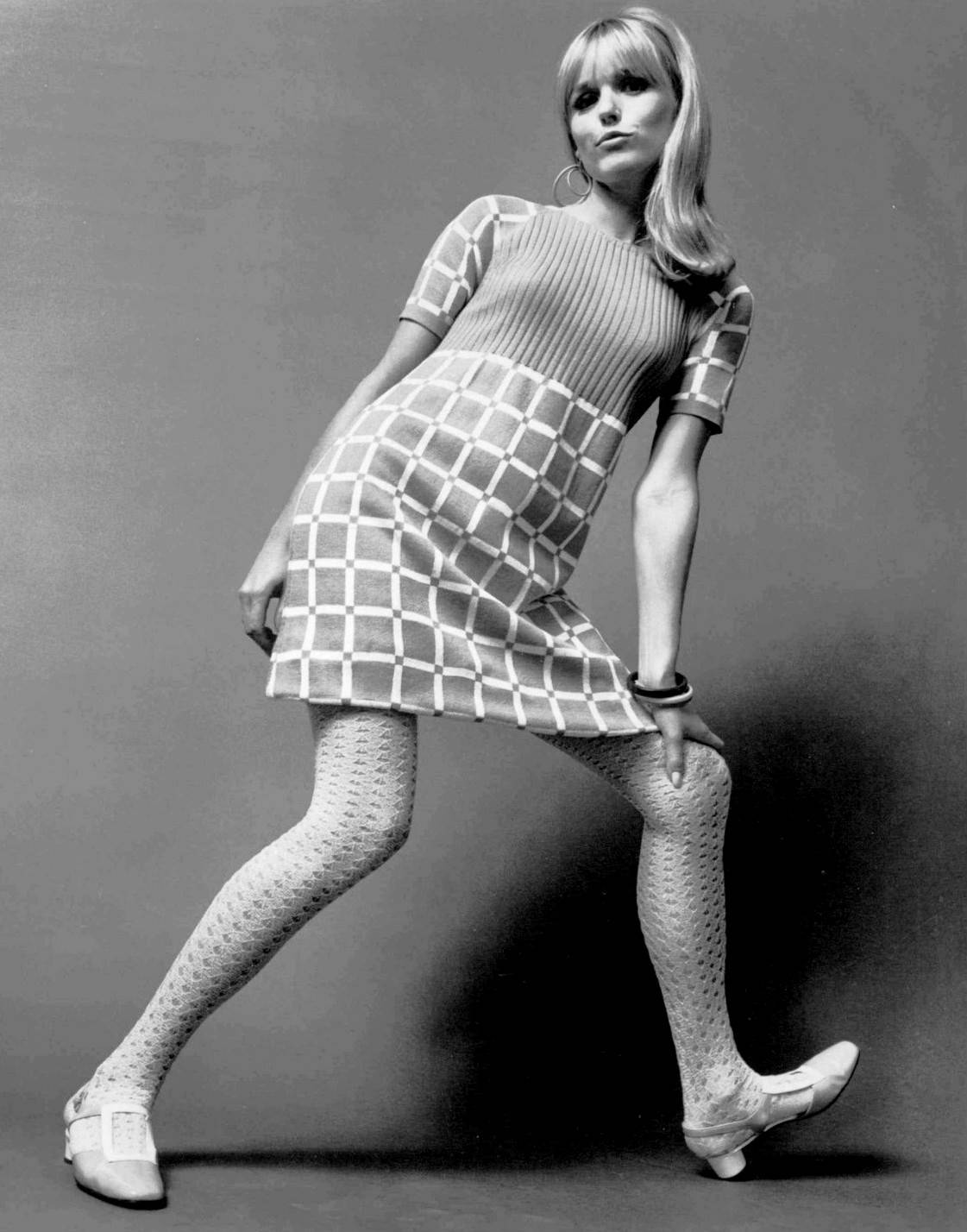
We probably think mostly of miniskirts when we think of the 1960s . But the 1960s was a decade with really many different fashion trends, something you can read more about in a previous blog post. The biggest difference, however, was the youth culture. The youth had received two things: money and (for the girls) pantyhose!
The first meant that the youth were now absolutely setting the tone for what happened on the fashion scene. The second meant the freedom to wear short dresses.
Mary Quant
Mary Quant who is considered the creator of the ' miniskirt ' said herself that she was just inspired by the girls she saw in London's hip districts, and that is what she recreated in her designs. That too was new. The old circle from catwalk to fashion in the street scene was turned upside down. Now it was 'street fashion' which was taken up as a trend and ended up on the catwalk of the finest designers, something that had not been seen before.
The colors were strong bang colors, it was all about wanting to recreate childhood, both with short dresses and strong colors. The colors had to look like something children would draw with.
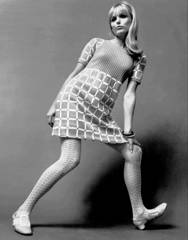
The style was dresses that were no longer than the knee, even when they were not mini skirts, and the shape was either straight up and down or it was A-line like.
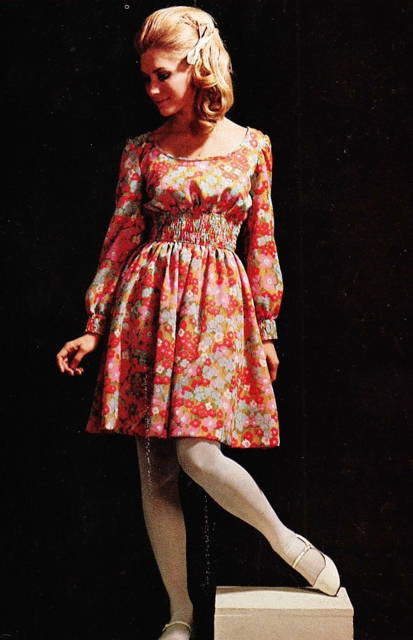
Nostalgia and babydoll
It was approx. 1964. You didn't just want to be allowed to be young, you wanted to be a child again and didn't want to be forced to be an adult and boring. There was a nostalgia associated with childhood and innocence, and the look reflected this. The babydoll look became famous.
The dresses were dresses with a short waist, a kind of empire cut, except that the dress itself was short. It made it look like something a child might wear. The makeup enhanced this look. Huge eyes with very large artificial eyelashes became the style.
The further we get into the 1960s , the more the psychedelic begins to gain ground. Patterns and colors are still strong, but more curved in style. At the same time, the style softens a little to the tune of flower power and a flair for exotic India becomes fashionable.
The shorter dresses and the babydoll dresses became a permanent part of the fashion picture, worn by all women, not just the young, hip ones.
The Yvonne look
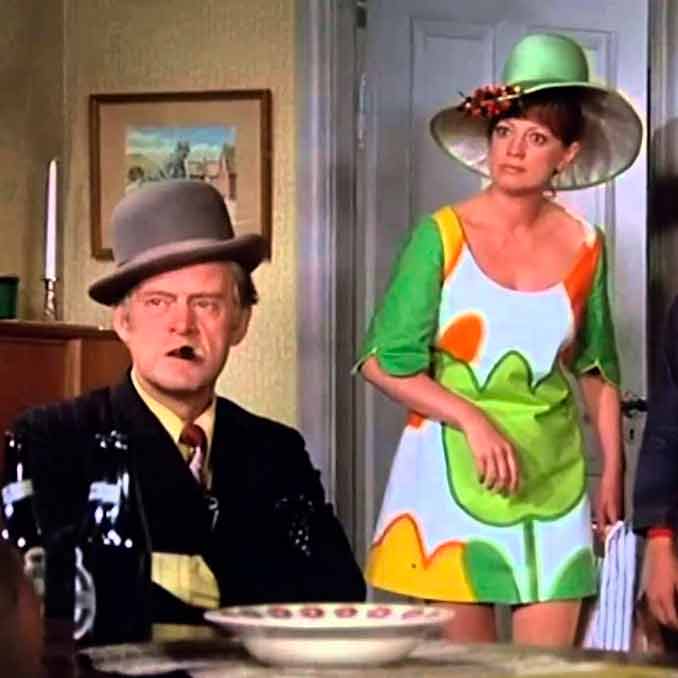
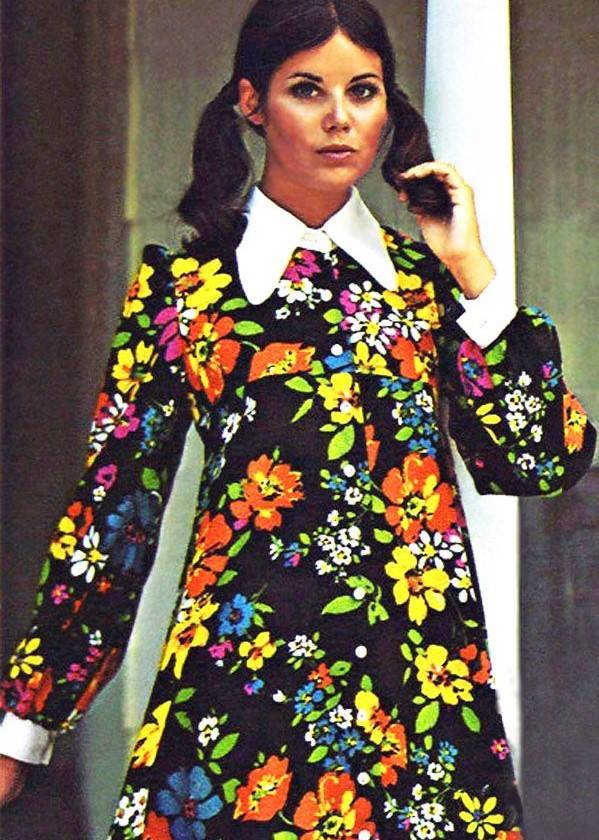
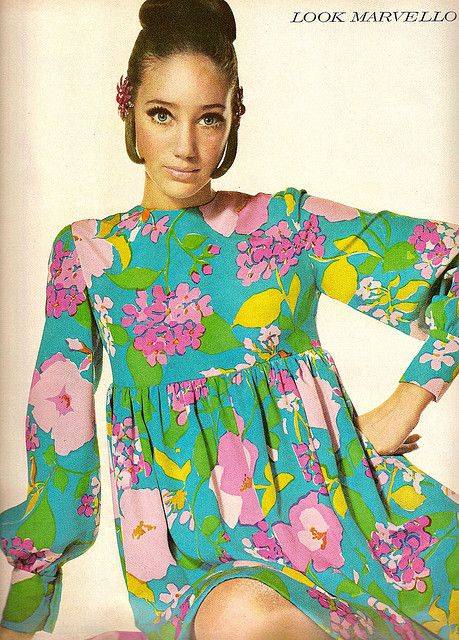
Here at home, we had our very own icon when it came to the strongly colored A-line dresses in the 60 's famous cut: Yvonne! Yvonne was the female protagonist in 13 Olsen gang films which she helped to record from 1968-1981. Yvonne's dresses were designed by Lotte Dendanell in collaboration with Kirsten Walther, who played Yvonne herself. The dresses are really more 1960s in style, both in expression, cut and not least length - which already made them fun in the 70s. Even if the print (Marimekko) was also big in the 70s, the cut was 60s-ish, and not at all romantic enough for the free 1970s.
The dresses were typically with large patterns, flowers or solid colors with lots of decorations, like the famous daisy dress. Here at home, they are signs of a dress that is very 70s-like and 'a little too much', but in fact it is the accessories that make it all too much. Big hats, wigs and huge platform heels are what we associate more with the fashion sins of the 70s. And although the worst fashion sin of the 60s and 70s was the extremely synthetic materials used for the dresses, it must be said that many of Yvonne's dresses were made of cotton, e.g. the large patterned Marimekko fabric.
Nostalgia, romance and everyday fashion
Towards the end of the 1960s, the style softens a bit and the dresses again become longer and more fluttering. Along with a fascination with India and the hippie culture, a veritable chaos of fashion and styles ensues. The mini dresses and all the psychedelic patterns have become everyday fashion, perhaps with a hint of some eastern inspiration. It can be difficult to see where one ends and the other begins. However, it should not be confused with the folklore and peasant romance of the 70s, that is a completely different matter.
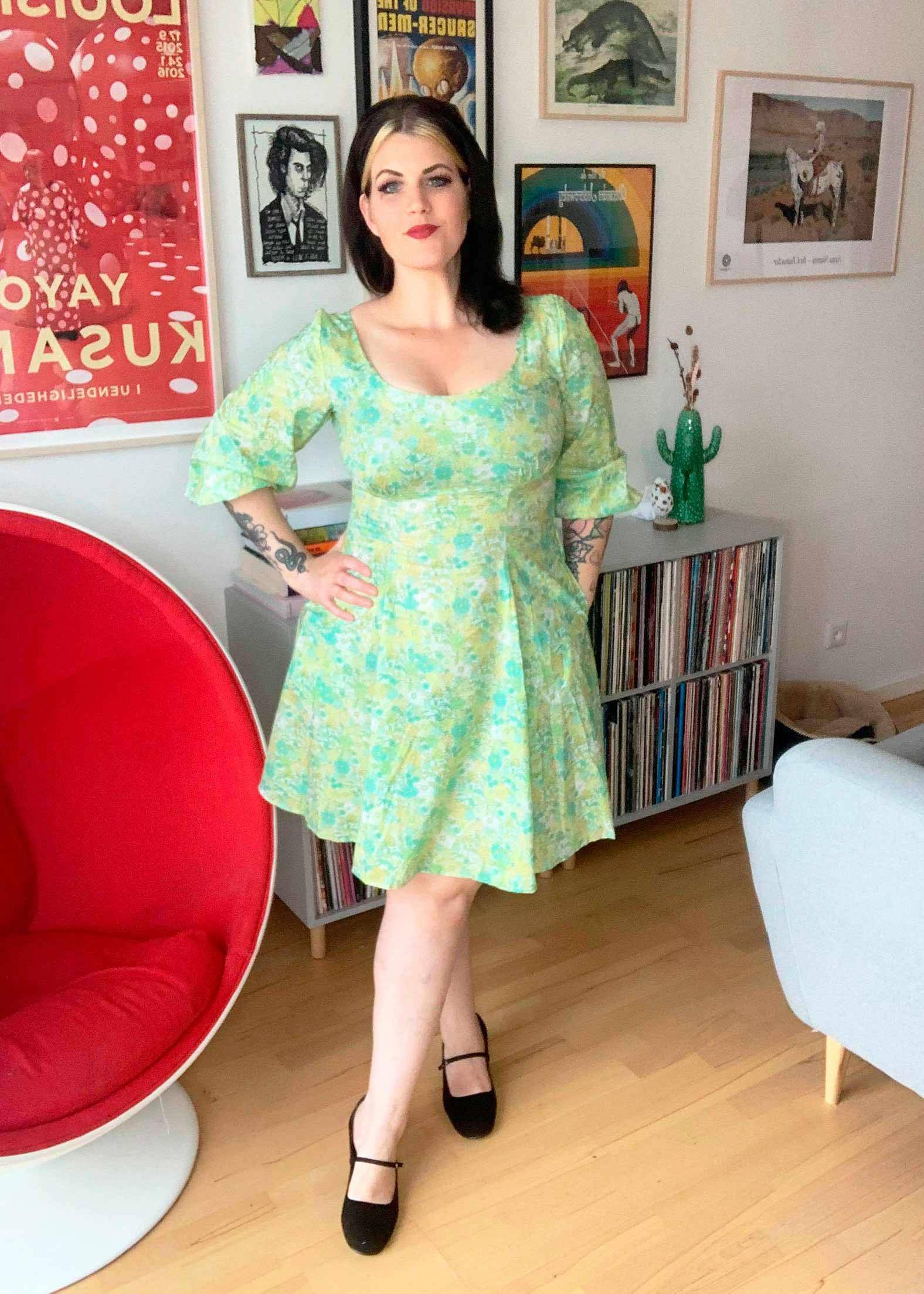
The new beautiful dresses from Heart of Haute
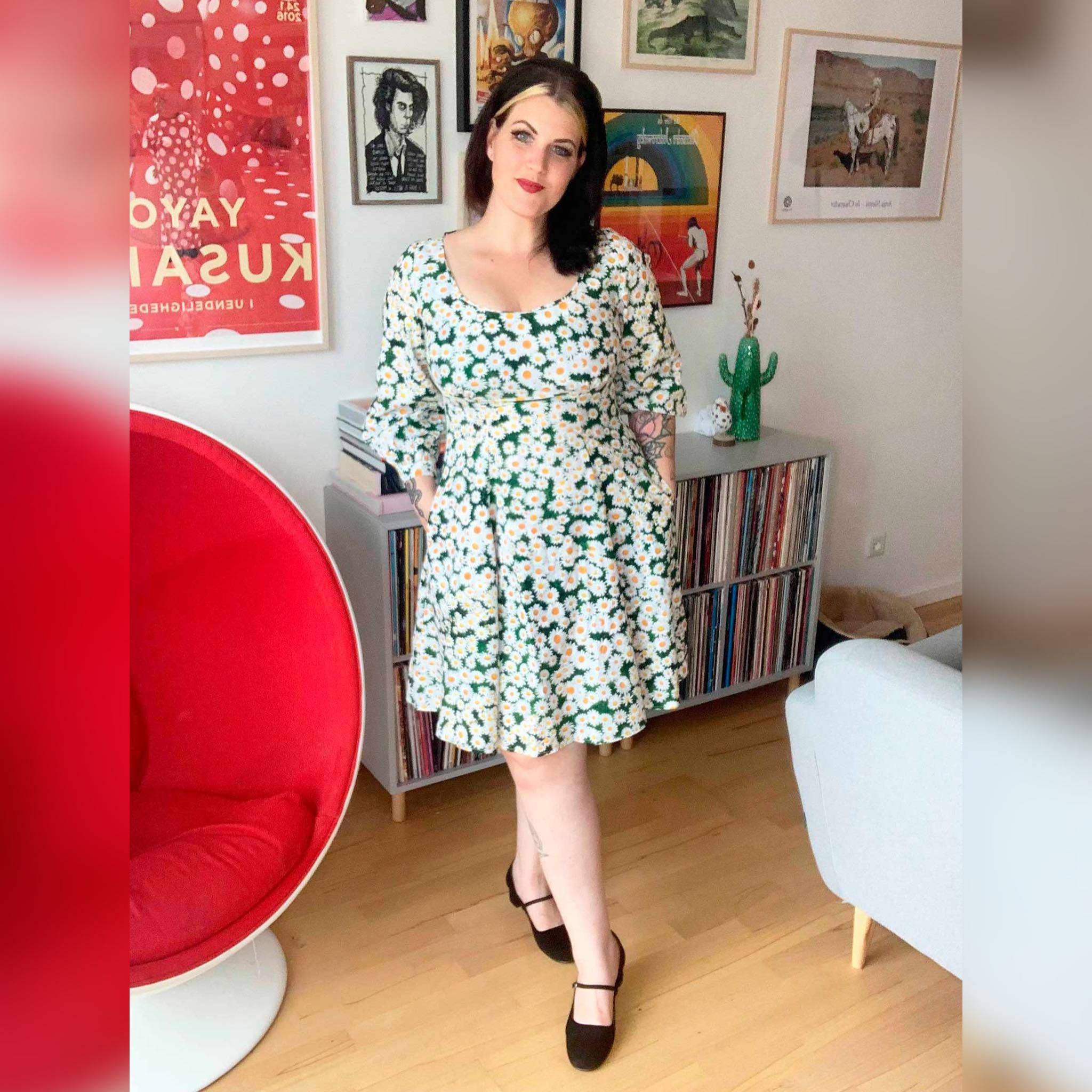
We have just received the wonderful Jenni dresses from Heart of Haute . They are inspired by the 1960s babydoll dresses with the deep round neck, the slightly high empire cut and beautiful loose bishops sleeves, sleeves which have fullness down to the wrist and gather at the cuff.
However, the feminine Jenni dress has been updated so that it does not go straight out in an A-shape after the high waist. Our model has a slight waist, and can be adjusted with a tie at the back just to the cut you want, so you get the best of all worlds.
The dress is made in a wonderfully lightweight cotton, which makes it perfect for warm days. We got it home in two beautiful patterns, the sweet and summery daisy print. And in a more pastel floral print kept in douce green and yellow shades with daisies in several sizes and colors.
Also take a look at the 50s-inspired Hilda dresses from Heart of Haute , which can also be styled for a wonderful 60s look .
You can choose to highlight the beautiful 60s style with e.g. The Lois sandals, or other block heel sandals. Or you can wear them with 'Mary Janes' such as Freja, the new shoes from Nordic ShoePeople.
You can also mix and match the expression e.g. with your favorite shoes and a light summer cardigan.
As always, you are also more than welcome to stop by the store for more advice and guidance on how to style your new Jenni dress.
Summer greetings from
Team Mondo Chaos
Read previous blog posts
Read about the Pinup girl
Read about jeans
Something the modern and retro wardrobe have 100% in common is jeans! Today, it is unthinkable to walk down the street and not come across someone wearing jeans - they have become a fashion staple.
Read about fashion in the 60s
At the beginning of the 60s, fashion was still very much as it was seen in the 50s. They used the form-fitting pencil dresses and also the wide skirts, which, however, became shorter and shorter before going over ...
Read more
You have probably seen us refer to novelty in relation to our beautiful vintage and retro clothes, for example. the clothes from Palava which often have prints and embroideries in a novelty des...
'Vintage style - not vintage values' Or said in Danish: vintage style yes please - no thank you to live like in the past. That's the motto from us who love the vintage style. None of us wa...